Welcome to our comprehensive guide on apple tree identification! Discover how to recognize apple trees by examining their leaves‚ bark‚ flowers‚ and fruit. Explore popular varieties‚ expert tips‚ and essential resources to accurately identify your tree and enhance your gardening experience.
Key Characteristics for Apple Tree Identification
Identifying apple trees involves examining leaves‚ bark‚ flowers‚ and fruit. Look for oval-shaped leaves with serrated edges‚ flaky bark‚ clusters of small white or pink flowers‚ and distinctive fruit features like size‚ color‚ and lenticels to determine the variety accurately.
Leaves
Apple tree leaves are a key feature for identification. They are typically oval-shaped with pointed tips and serrated edges. The leaves are usually dark green on the upper side and lighter green on the underside‚ often with a downy texture. The leaf petiole (stalk) is short and may be hairy. Young leaves can appear reddish before maturing to their full green color. The size of leaves can vary slightly between varieties but generally ranges from 2 to 4 inches in length. Some varieties‚ like Granny Smith‚ may have more elongated leaves‚ while others are broader. The arrangement of leaves on the twig is alternate‚ meaning they grow singly along the stem. Observing these characteristics‚ such as color‚ texture‚ and edge serration‚ can help narrow down the identification process. Additionally‚ the presence of downy hairs on the underside of leaves is a common trait in many apple tree varieties. These details‚ combined with other features like bark and fruit‚ provide a comprehensive approach to identifying the specific type of apple tree.
Bark
The bark of an apple tree is another important feature for identification. Young apple trees typically have smooth‚ gray bark that becomes rough and scaly as the tree matures. The bark often develops a mottled appearance with patches of gray‚ brown‚ and sometimes reddish hues. Over time‚ the bark may peel or flake off‚ revealing a pattern of shallow furrows and ridges. The texture of the bark can vary slightly between varieties‚ but most apple trees share this general characteristic of rough‚ weathered bark. The color tends to darken with age‚ becoming more pronounced in older trees. While the bark alone may not be enough to identify the exact variety‚ it provides valuable clues when combined with other features like leaves and fruit. Observing the bark’s texture‚ color‚ and pattern can help distinguish apple trees from other similar species. This characteristic is particularly useful for identifying trees during the dormant season when leaves and flowers are absent.
Flowers
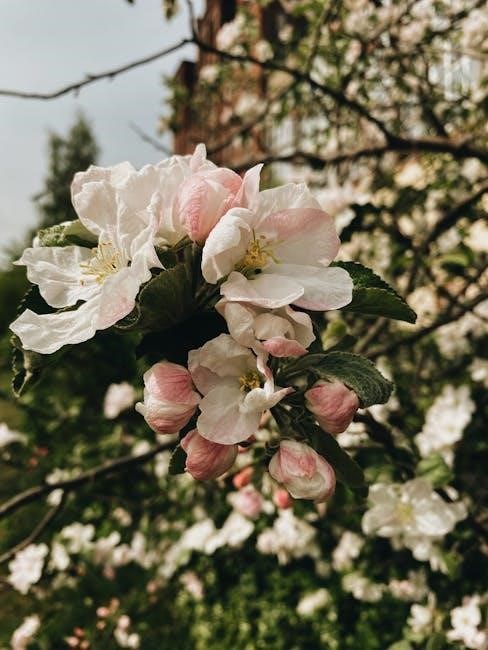
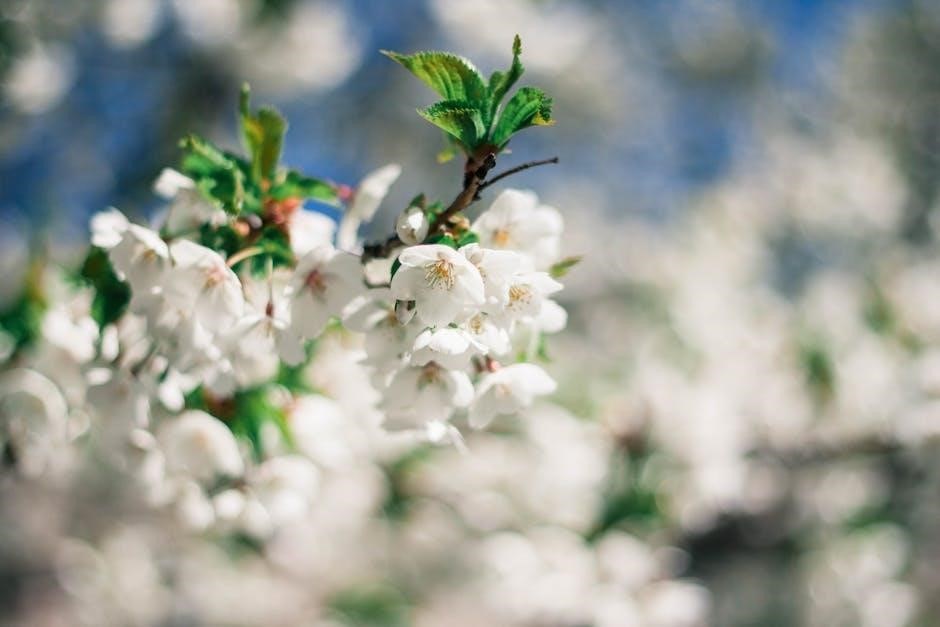
Apple tree flowers are a key feature for identification‚ typically blooming in early spring. They are small‚ fragrant‚ and arranged in clusters at the ends of branches. Each flower is bisexual‚ containing both male and female reproductive parts‚ though cross-pollination is often required for fruit production. The flowers are usually white or tinged with pink‚ with five petals that form a star-like shape. The clusters of flowers‚ known as corymbs‚ are a distinguishing characteristic of apple trees compared to other flowering trees. The timing and duration of flowering can vary depending on the variety and climate‚ but most apple trees bloom for about two weeks. While the flowers are a reliable identifier‚ they are seasonal‚ so identification must also rely on other features like leaves and bark during the rest of the year. Observing the color‚ arrangement‚ and fragrance of the flowers can provide valuable clues for identifying the tree. This feature is especially useful during the blooming season when flowers are most prominent.
Fruit
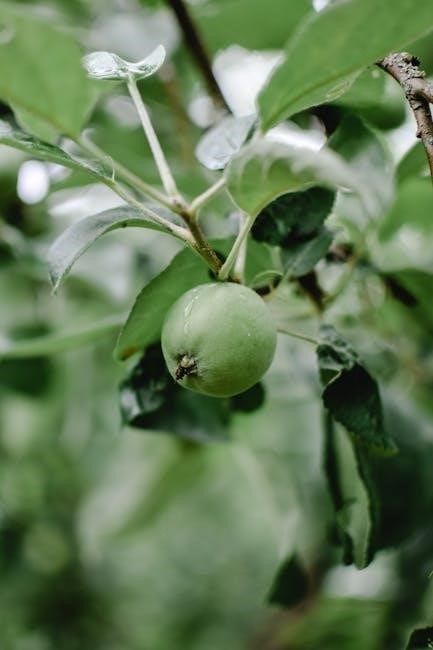
The fruit of an apple tree is one of its most recognizable features and a crucial element for identification. Apples vary widely in size‚ shape‚ color‚ and texture‚ depending on the variety. Common characteristics include a rounded or oval shape‚ with some varieties featuring ribbed or lopsided forms. The skin may be smooth or russeted‚ with colors ranging from red‚ green‚ yellow‚ or a combination of these; Lenticels‚ small‚ raised dots on the skin‚ are a distinctive feature of apples. The stem is typically short and sturdy‚ attaching the fruit to the branch. When cut open‚ the fruit reveals a star-shaped pattern around the core‚ with seeds embedded in the center. The flesh can be crisp‚ tender‚ sweet‚ or tart‚ varying significantly across varieties like Red Delicious‚ Granny Smith‚ or Honeycrisp. The fruit’s size‚ color‚ and flavor are key identifiers‚ as these traits are often unique to specific apple varieties. By examining these characteristics‚ you can narrow down the type of apple tree you are observing.
Growth Habits
Apple trees exhibit distinct growth habits that can aid in identification. They typically thrive in full sun and well-drained soil‚ developing a semi-broad trunk with wide‚ spreading branches. Some varieties may grow upright‚ while others have a more rounded or conical shape. The tree’s size can range from 15 to 30 feet tall‚ depending on the rootstock and pruning practices. Dwarf or semi-dwarf varieties are smaller‚ making them ideal for home gardens. Apple trees often develop spurs—short‚ thorn-like growths along the branches—that bear flowers and fruit. Regular pruning is essential to maintain a healthy structure‚ promote airflow‚ and encourage fruit production. The tree’s growth rate is moderate‚ with young trees gaining about 1-2 feet annually. Over time‚ apple trees can develop a broad‚ rounded crown‚ especially when left unpruned. Understanding the growth habits of apple trees‚ such as their branching patterns and overall shape‚ can provide valuable clues for identification and help in managing the tree’s health and productivity.
Tree Parts and Their Identification Features
Understanding the distinct characteristics of apple tree parts is crucial for accurate identification. Examine the trunk‚ branches‚ twigs‚ flowers‚ and fruit for unique features that set apple trees apart from other species in the Rosaceae family.
Trunk and Branches
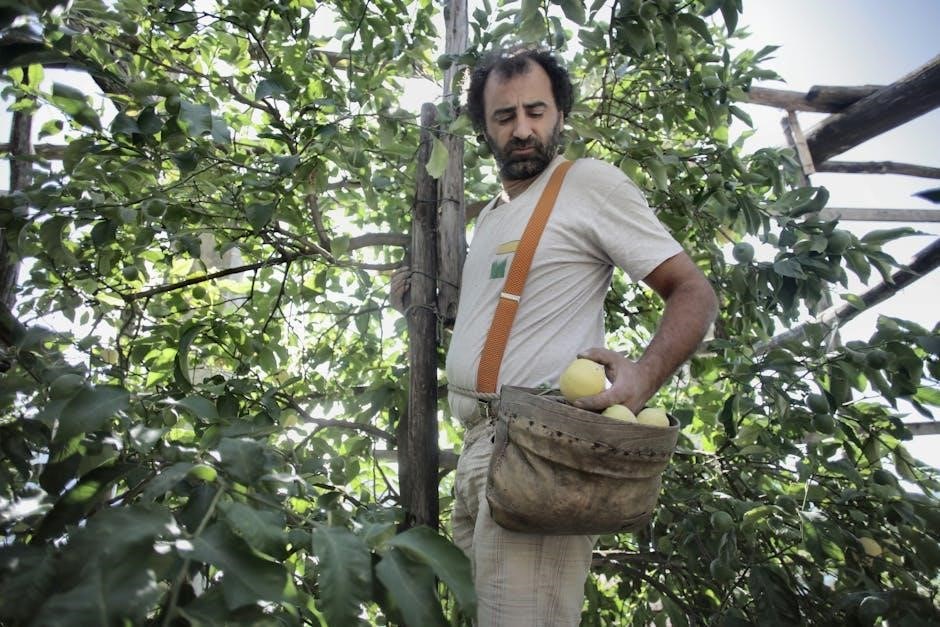
The trunk of an apple tree is typically sturdy and straight‚ with a grayish-brown bark that develops scales as the tree matures. Young trees often have smooth bark‚ while older trees may exhibit flaky or peeling patterns. The trunk’s diameter can vary depending on the tree’s age and variety‚ but it generally supports a broad‚ spreading canopy. Apple tree branches are strong and slightly zigzag‚ with a rough texture that becomes more pronounced with age. They often grow in a vase-like shape‚ especially in cultivated varieties‚ allowing for good air circulation and sunlight penetration. Some apple trees may develop spurs—short‚ thorn-like growths along the branches—that are sites of flower and fruit production. These spurs are a key feature for identifying apple trees‚ as they are rarely found on other species in the Rosaceae family. By examining the trunk’s bark and the branching pattern‚ you can gain valuable insights into the tree’s identity and maturity.
Twigs

Apple tree twigs are a crucial feature for identification‚ offering distinct characteristics that help distinguish them from other species. Young twigs typically have a greenish-brown color and are covered with fine‚ downy hairs‚ especially during the first year of growth. As they mature‚ the color transitions to a darker brown‚ and the texture becomes smoother. The internodes (the segments between buds) are usually hairy‚ a trait that can help differentiate apple twigs from those of other fruit trees. Buds on apple twigs are plump and often have scales that protect them during the winter months. They are arranged alternately along the twig‚ and their placement can provide clues about the tree’s variety. In some cases‚ twigs may bear small thorns or spurs‚ which are short‚ branch-like growths that eventually produce flowers or fruit. Examining the twig’s color‚ texture‚ and bud arrangement can provide valuable insights into the tree’s identity and help narrow down the variety.
Apple tree flowers are a key feature for identification‚ blooming in early spring and lasting for about two weeks. They grow in clusters of 4-6 flowers at the ends of branches‚ with each flower measuring approximately 1-1.5 inches in diameter. The blossoms are typically white with pink accents‚ though some varieties may have deeper pink or even red hues. Each flower has five petals‚ arranged in a star-like pattern‚ and is highly fragrant‚ attracting pollinators like bees. The flowers are also bisexual‚ containing both male and female reproductive organs‚ which facilitates cross-pollination. The clusters are supported by a central stem‚ and the individual flowers are attached by short stalks. After blooming‚ the flowers develop into fruit‚ making their appearance a critical phase in the tree’s life cycle. Observing the color‚ size‚ and arrangement of flowers can help identify specific apple tree varieties‚ as these traits often vary among cultivars. This characteristic is particularly useful when leaves or fruit are not yet present for examination.
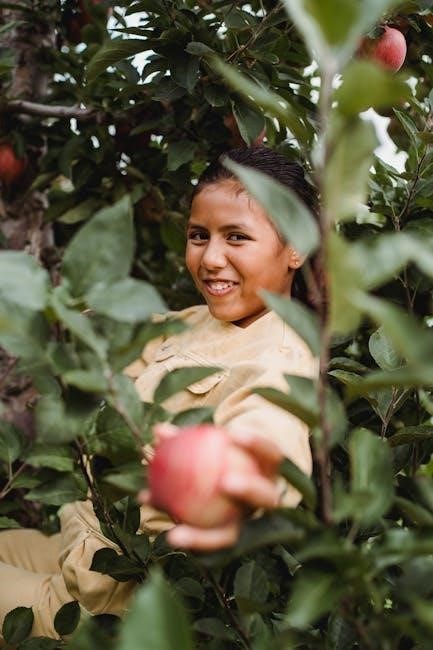
The fruit of an apple tree is one of its most distinctive and useful features for identification. Apples vary widely in size‚ shape‚ color‚ and texture‚ depending on the variety. Common characteristics include a rounded or oval shape‚ with some varieties featuring ribbed or elongated forms. The skin may be smooth or russeted‚ and colors range from solid red‚ green‚ or yellow to striped or blushed patterns. Lenticels‚ small‚ raised dots on the skin‚ are also present and can vary in number and size. The flesh inside is typically crisp and juicy‚ with flavors ranging from sweet to tart. Seeds are contained within a central core‚ surrounded by a star-shaped pattern of carpels. Apples ripen in late summer to early fall‚ and their appearance can provide critical clues for identifying the tree. For example‚ Red Delicious apples are known for their deep red color and distinctive shape‚ while Granny Smith apples are green with a tart flavor. Examining the fruit’s size‚ color‚ and texture‚ along with its growth habits‚ can help narrow down the specific variety of the apple tree.
Popular Apple Tree Varieties
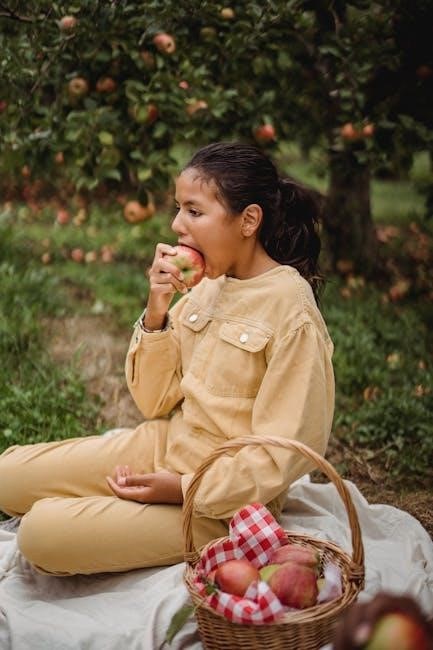
Popular apple tree varieties include Red Delicious‚ Granny Smith‚ and Honeycrisp. Each variety boasts unique characteristics‚ such as shape‚ color‚ and flavor‚ making them easily recognizable and widely cultivated for both home gardens and commercial production.
Red Delicious
The Red Delicious apple tree is one of the most recognizable varieties due to its iconic bright red‚ elongated fruit. Known for its sweet flavor and tender texture‚ this variety is widely cultivated for fresh eating and salads. The trees are relatively adaptable to various climates and soil conditions‚ making them a popular choice for home gardens and orchards. Red Delicious trees typically grow to a medium height with a spreading canopy‚ producing showy white flowers in the spring. Their leaves are ovate with serrated edges‚ and the bark is smooth with a reddish-brown hue. For identification‚ look for the distinctive fruit shape‚ which tapers to a pointed top‚ and the vibrant red skin that often covers the entire apple. Gardeners often appreciate the tree’s reliability and consistent fruit production. While Red Delicious apples are less acidic than some other varieties‚ their sweetness and classic appearance make them a timeless favorite among growers and consumers alike.
Granny Smith
The Granny Smith apple tree is a beloved variety known for its vibrant green fruit and tart flavor‚ making it a favorite for baking‚ cooking‚ and fresh eating. Originating in Australia in the 1860s‚ this tree is highly adaptable and thrives in various climates‚ though it prefers well-drained soil and full sun; Granny Smith trees are medium-sized with a rounded crown and spreading branches‚ producing white flowers in spring. Their leaves are dark green‚ ovate‚ and slightly serrated‚ while the bark is smooth and grayish-brown. The apples are easily identifiable by their bright green skin‚ often with yellow or red highlights‚ and their firm‚ juicy flesh. Known for their long shelf life and disease resistance‚ Granny Smith trees are a popular choice for home orchards and commercial growers alike. Their tartness makes them ideal for pies‚ sauces‚ and cider‚ while their sweetness develops when cooked. Gardeners appreciate their reliability and consistent fruit production‚ making Granny Smith a timeless and versatile variety for many uses.
Honeycrisp
The Honeycrisp apple tree is one of the most popular and sought-after varieties due to its exceptional fruit quality and unique characteristics. Developed in the 1960s at the University of Minnesota‚ this tree is known for its cold hardiness and adaptability to various climates. Honeycrisp apples are large‚ with a striking red skin often featuring yellow or green patches. Their flesh is renowned for its juiciness‚ crisp texture‚ and balanced sweet-tart flavor‚ making them a favorite for fresh eating and salads. The tree itself is medium-sized with a spreading canopy and showy white flowers in spring. Its leaves are dark green‚ ovate‚ and slightly serrated‚ while the bark is smooth and grayish-brown. Honeycrisp trees prefer well-drained soil and full sun‚ though they can tolerate some shade. They are relatively low-maintenance but may require regular pruning to promote airflow and prevent disease. Despite their popularity‚ Honeycrisp trees can be challenging to grow due to their susceptibility to scab and fire blight. Their exceptional fruit quality and flavor have made them a staple in orchards and home gardens worldwide.

Tools and Resources for Identification
Utilize field guides‚ mobile apps‚ and DNA sampling for accurate apple tree identification. Consult experts or local nurseries for specialized knowledge. Historical documentation and plant labels can also provide crucial clues for determining the tree’s variety and origin.
Field Guides
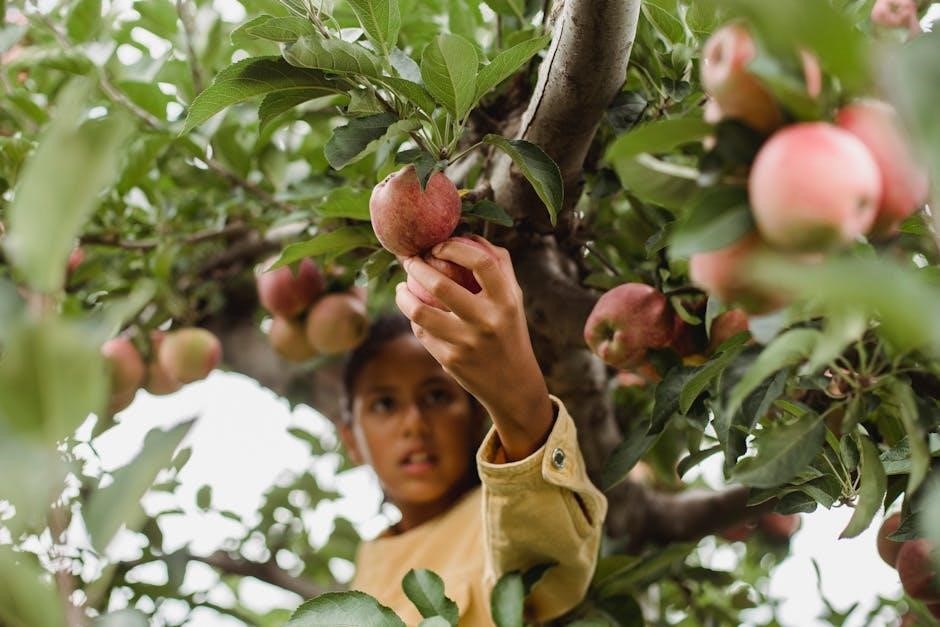
Field guides are indispensable tools for identifying apple trees‚ offering detailed descriptions and images of various species. These guides typically cover key characteristics such as leaf shape‚ bark texture‚ flower appearance‚ and fruit features. Many include tips for distinguishing between similar varieties and provide insights into growth habits and regional adaptability. For example‚ The Apple Grower by Michael Phillips is a highly recommended resource‚ offering comprehensive information on apple tree identification and care. Field guides often include charts or keys that help narrow down possibilities based on specific traits‚ making the identification process more systematic. Additionally‚ they may highlight common pests‚ diseases‚ and management practices‚ which can indirectly aid in identifying a tree by its health and condition. Portable and user-friendly‚ field guides are ideal for gardeners‚ naturalists‚ and anyone seeking to accurately identify apple trees in their yard or orchard. By combining scientific accuracy with practical advice‚ field guides remain a cornerstone of apple tree identification.
Mobile Apps
Mobile apps have revolutionized the process of apple tree identification‚ offering a convenient and accessible way to determine tree species. Apps like Leafsnap and PlantSnap use visual recognition technology to identify plants based on photos of their leaves‚ flowers‚ or fruit. Users can simply upload images of their apple tree’s features‚ and the app will provide a list of potential matches. These tools are particularly useful for beginners‚ as they simplify the identification process and reduce the need for extensive botanical knowledge. Additionally‚ apps like iNaturalist allow users to share observations with a community of experts and enthusiasts‚ fostering collaborative learning. Many apps also include detailed descriptions‚ high-quality images‚ and range maps to help confirm identifications. Furthermore‚ some apps offer tips on tree care‚ pest management‚ and optimal growing conditions‚ making them a holistic resource for apple tree enthusiasts; By leveraging modern technology‚ mobile apps have made apple tree identification more efficient and engaging than ever before.
DNA Sampling
DNA sampling is a highly accurate method for identifying apple tree varieties‚ especially when traditional characteristics like leaves‚ flowers‚ or fruit are unclear or unavailable. This scientific approach involves analyzing the tree’s genetic material to determine its specific variety. By collecting a small tissue sample—such as a leaf or bud—and sending it to a specialized laboratory‚ experts can compare the DNA to a database of known apple tree varieties. This method is particularly useful for identifying heritage or unknown trees‚ as it bypasses the need for visual traits that may be absent or ambiguous. While DNA sampling is more expensive and time-consuming than other methods‚ it provides unparalleled precision‚ making it a valuable tool for researchers‚ orchardists‚ and enthusiasts seeking definitive identification. Many universities and agricultural extension services offer DNA testing services‚ ensuring accessibility for those interested in uncovering the genetic identity of their apple trees. This advanced technique complements traditional identification methods‚ offering a modern solution to the age-old challenge of determining apple tree varieties.
Consulting Experts
Consulting experts is a reliable method for accurately identifying apple tree varieties‚ especially when other methods like DNA sampling or field guides are inconclusive. Experts‚ such as botanists‚ horticulturists‚ or experienced orchardists‚ possess in-depth knowledge of apple tree characteristics and can provide precise identification. Local nurseries‚ botanical gardens‚ or universities often have specialists who can examine the tree’s features‚ such as leaf shape‚ bark texture‚ and fruit appearance‚ to determine its variety. Additionally‚ professional organizations like county extensions or horticultural societies offer expert advice and may even accept samples for analysis. When consulting an expert‚ it’s helpful to provide detailed descriptions‚ photographs‚ or physical samples of the tree’s leaves‚ flowers‚ and fruit. This ensures a more accurate assessment. While this method requires reaching out to professionals‚ it offers the benefit of personalized insights and tailored advice for tree care and management. Consulting experts is particularly valuable for rare or heritage apple tree varieties that may not be easily identifiable through other means. By leveraging their expertise‚ you can gain a deeper understanding of your apple tree and its unique characteristics. This approach is both educational and practical‚ making it a worthwhile step in the identification process.
Regional Considerations
Regional factors like climate and soil significantly impact apple tree growth and variety. Certain regions favor specific apple types‚ such as Honeycrisp in cooler climates or Granny Smith in warmer areas. Local nurseries and experts can provide insights tailored to your region‚ ensuring accurate identification and optimal tree care.
Climate Factors
Climate plays a crucial role in apple tree identification‚ as different varieties thrive in specific conditions. Cooler climates often favor varieties like Honeycrisp‚ which require colder winters for proper dormancy. In contrast‚ warmer climates may support varieties such as Granny Smith‚ which are more tolerant of heat. Temperature fluctuations can impact flowering times‚ fruit development‚ and overall tree health. For instance‚ regions with mild winters may struggle to grow varieties that require a certain number of chill hours to break dormancy. Additionally‚ extreme weather events‚ such as late frosts‚ can damage blossoms and reduce fruit production. Understanding the local climate is essential for identifying apple trees accurately‚ as it influences growth patterns‚ fruit characteristics‚ and the prevalence of specific varieties. By considering these factors‚ gardeners and enthusiasts can better recognize and care for apple trees in their region‚ ensuring optimal growth and fruit quality.
Soil Conditions
Soil conditions significantly influence the growth and identification of apple trees. Apple trees prefer well-draining‚ fertile soil with a pH between 6.0 and 6.5‚ as this range supports optimal nutrient uptake. Poor drainage can lead to root rot and stunted growth‚ making identification challenging. Varieties like Red Delicious and Granny Smith thrive in loamy soils‚ while Honeycrisp prefers slightly sandy soils for better drainage. Regional soil types‚ such as clay or silt‚ can affect tree health and fruit quality. For example‚ trees in clay soils may develop deeper root systems but are more prone to waterlogging. In contrast‚ sandy soils promote healthy root development but require more frequent watering. Soil fertility also plays a role‚ as nutrient-deficient soils can result in smaller leaves and fewer flowers. Testing soil pH and adjusting it if necessary is crucial for maintaining tree health. By understanding the soil conditions in your area‚ you can better identify apple tree varieties and ensure they receive the right care for optimal growth and fruit production.